Spiralling Up
Your path to decision conviction
Decision Compression and Decision Conviction: Understanding the Spiral
The two spirals presented here map the psychological journey leaders take when confronting choice under pressure. At their endpoints lie two fundamentally different relationships with decision-making: compression and conviction.
Decision Compression: The Descent into Death
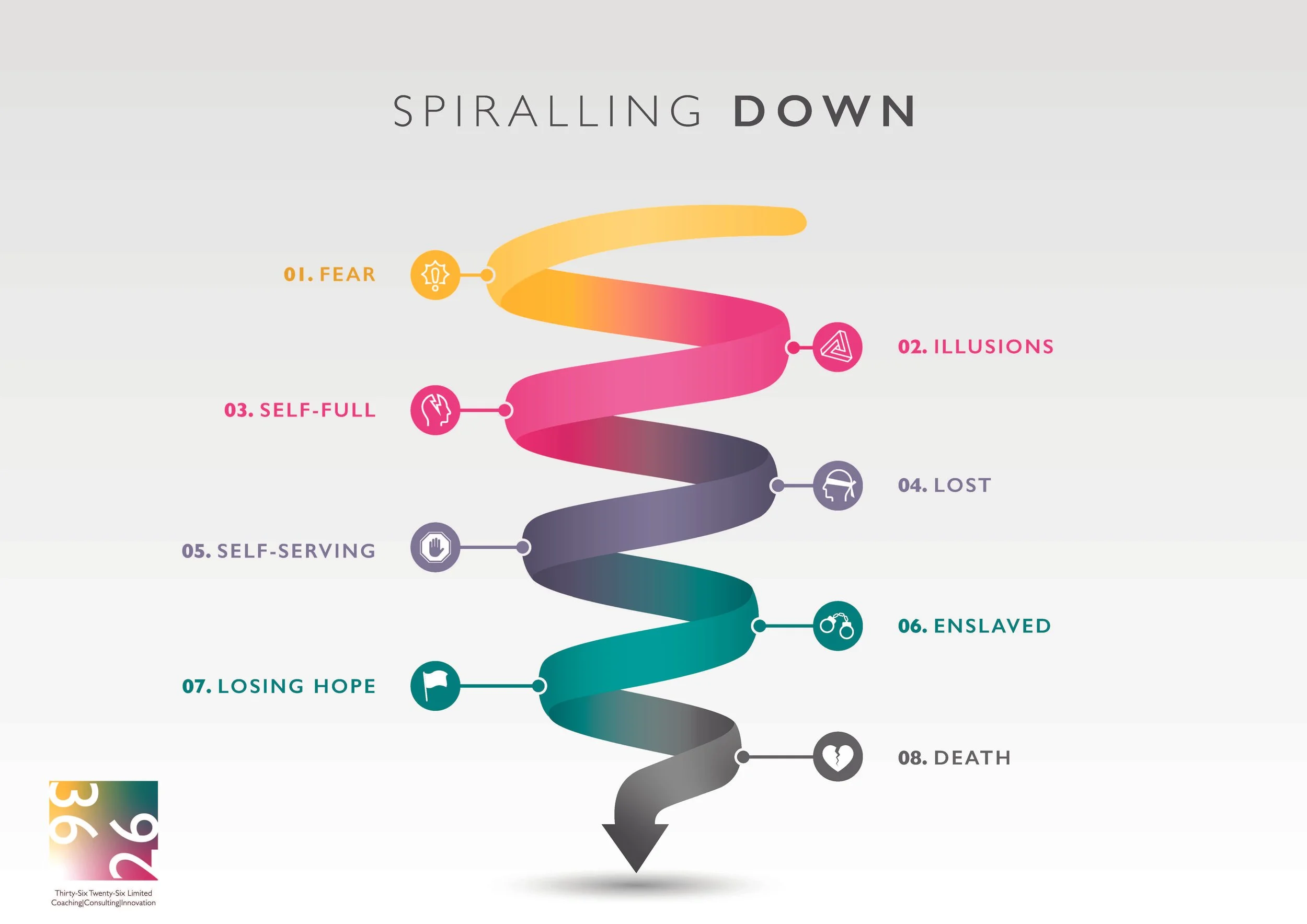
The downward spiral terminates at what the framework calls "death" – not literal mortality, but the death of agency, possibility, and forward momentum. This is decision compression: the progressive narrowing of perceived options until choice itself becomes impossible.
It begins with fear. Not the productive fear that sharpens focus, but the paralysing variety that distorts perception. This fear generates illusions – false beliefs about what's at stake, what's possible, and what others expect. Leaders in this state become increasingly self-full, preoccupied with protecting themselves rather than serving the mission. They feel lost, disconnected from purpose and clarity.
As the compression intensifies, behaviour becomes self-serving – decisions (when they happen at all) are made to avoid pain rather than create value. The leader becomes enslaved to circumstances, to others' opinions, to the tyranny of "should." Hope drains away as the walls close in.
At the bottom of this spiral, leaders experience decision compression in its final form: complete paralysis. Not because they lack information, but because they've lost the psychological capacity to act on it. The risk feels infinite. The impact feels catastrophic. Every option feels simultaneously essential and impossible. This is where high performers "go quiet" – not from burnout, but from being crushed under the weight of analysis without the capacity for commitment.
Decision Conviction: The Ascent to Life
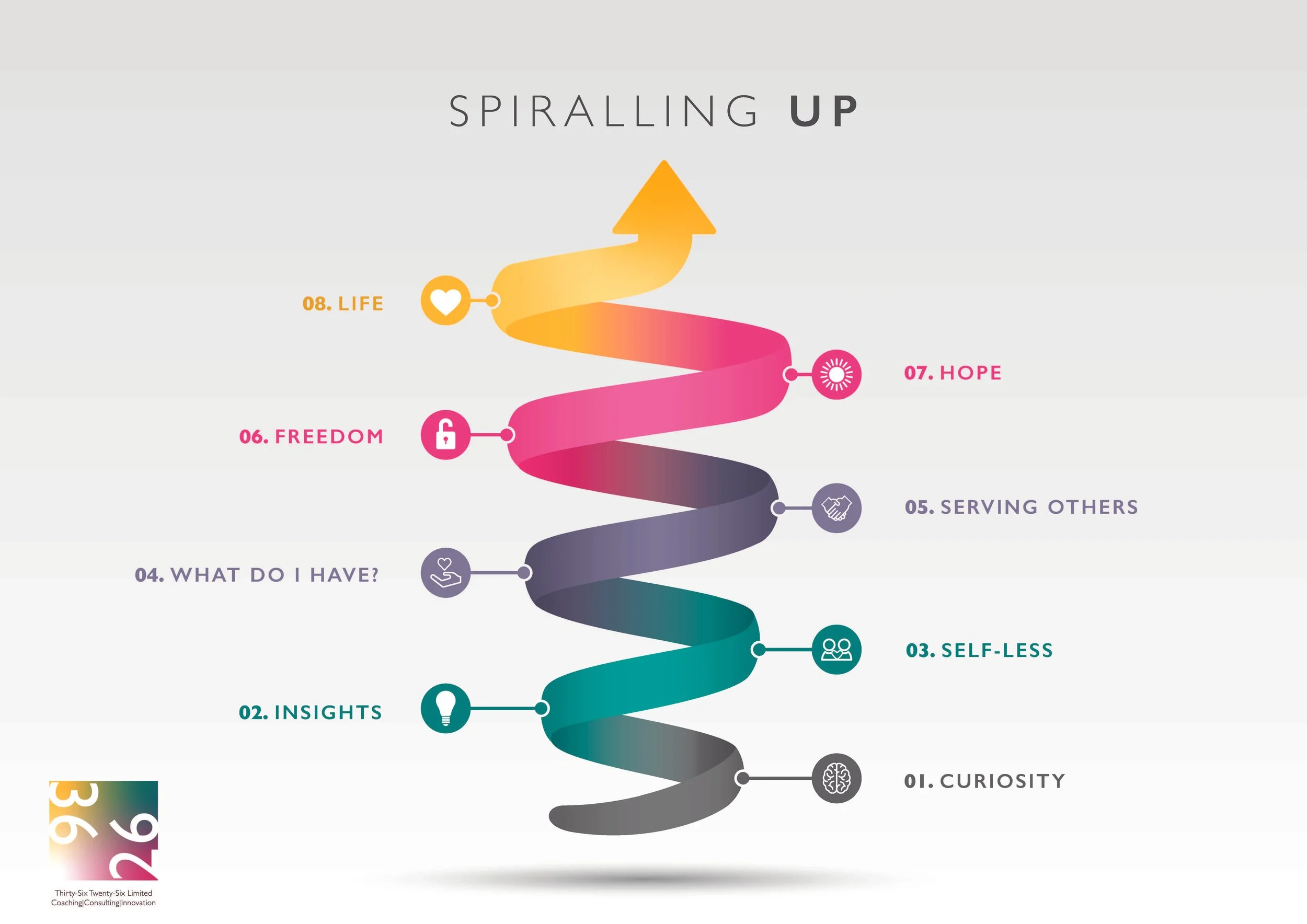
The upward spiral offers a different path, beginning with curiosity. Where fear seeks certainty, curiosity seeks understanding. It opens space for insights – seeing patterns, connections, and possibilities that were invisible from within the compression.
These insights enable a shift from self-full to self-less – not self-denying, but self-aware enough to hold one's ego lightly. From this space, leaders ask "What do I have?" rather than "What do I lack?" This reframe transforms the decision landscape. They move from self-serving to serving others, from enslaved to free, from losing hope to discovering it renewed.
At the apex sits life – which the framework reframes as decision conviction. This is the capacity to commit to your decisions having understood the risk, impact, and information available to you.
Decision conviction doesn't eliminate risk or guarantee outcomes. It accepts that all decisions are made with incomplete information, uncertain futures, and trade-offs. But rather than compressing under this reality, leaders with conviction hold it firmly and act regardless.
They're convicted enough to commit – acknowledging that making imperfect decisions with limited information is the fundamental condition of leadership, not a reason to delay. They're convicted enough to back the decision – treating it as something worth defending and executing fully, even whilst remaining open to adjustment. And they're convicted enough to lead others through it – transparent about uncertainty whilst maintaining direction.
The Choice Between Spirals
These aren't permanent states but dynamic patterns. Leaders can find themselves on either spiral at different moments, with different decisions. The critical skill isn't avoiding the downward pull – it's recognising which spiral you're on and understanding that curiosity, not certainty, is the way back up.
Decision conviction isn't certainty. It's commitment to acting on what you know, accepting what you don't, and executing anyway. It's choosing the best available decision at this time, and having the strength to back it.